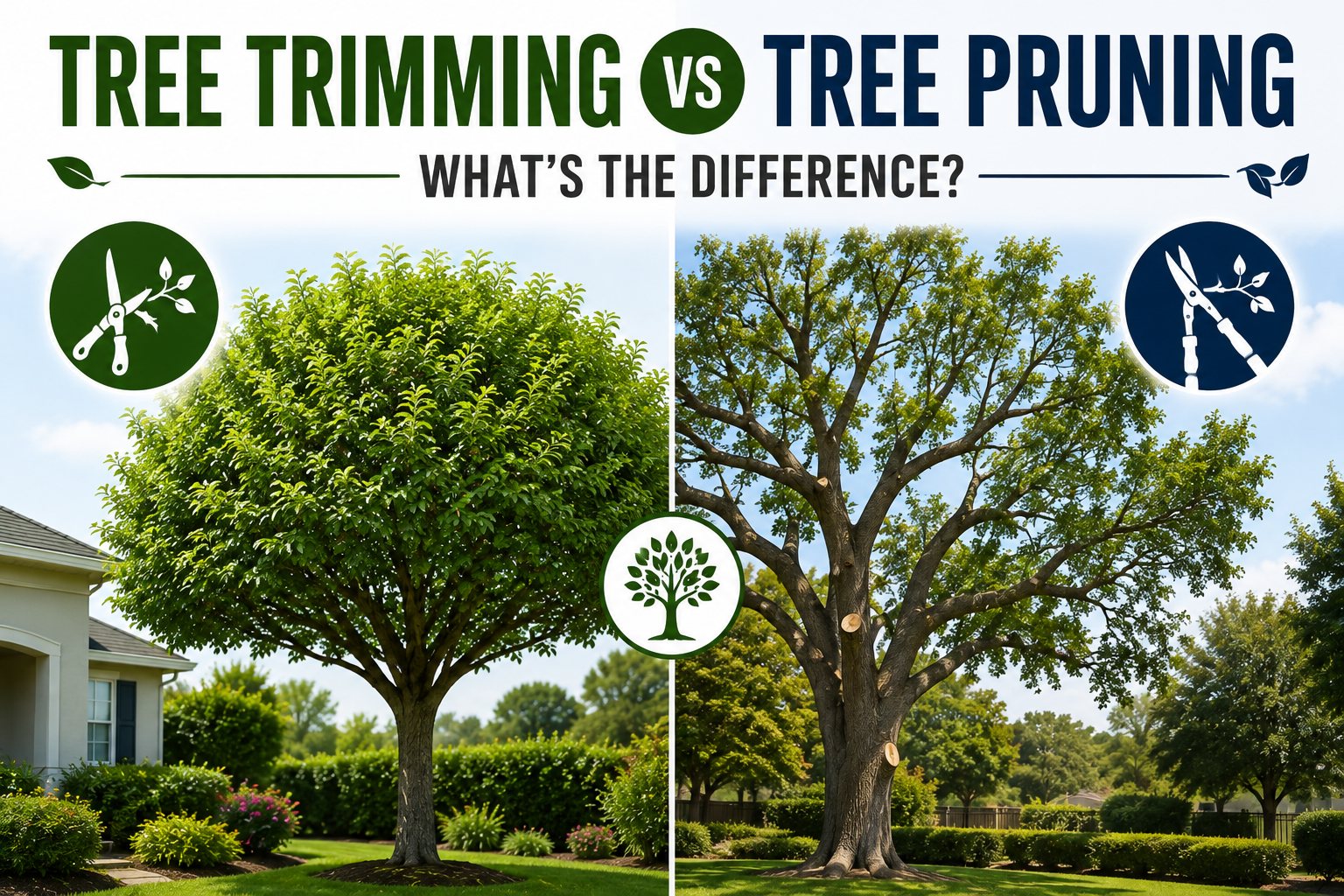
Healthy trees add shade, beauty, privacy, and value to a property, but maintaining them requires more than simply cutting away branches when they become inconvenient. Two terms commonly used in tree care are tree trimming and tree pruning. Although they are often used interchangeably, they can refer to different goals and approaches.
Understanding the difference can help homeowners choose the right service, avoid unnecessary damage, and keep their trees healthy and structurally sound.
What Is Tree Trimming?
Tree trimming generally refers to cutting branches to manage the size, shape, and appearance of a tree. It is often performed when branches have grown too close to buildings, roofs, power lines, driveways, walkways, or other structures.
Trimming can also improve the overall appearance of a landscape by removing overgrown or unwanted growth. For example, a homeowner may trim a tree to maintain clearance around a roof or keep branches from interfering with a driveway.
The primary focus of trimming is often clearance, appearance, and size management.
What Is Tree Pruning?
Tree pruning is more focused on the health, structure, and long-term development of the tree.
Pruning may involve removing dead, diseased, damaged, weak, or poorly positioned branches. It can also help improve branch spacing, reduce structural problems, and encourage healthier growth.
Rather than simply cutting branches because they look inconvenient, pruning involves making selective cuts based on the tree’s condition and growth pattern.
The primary goal is generally tree health and structural improvement.
Tree Trimming vs. Tree Pruning
The easiest way to understand the difference is to consider the purpose behind the work.
Trimming is commonly performed to control growth, maintain clearance, or improve appearance. Pruning is typically performed to improve the tree’s health, structure, and safety.
In practice, professional tree-care companies may use the terms differently, and some services can overlap. What matters most is understanding what work will actually be performed and why.
Why Proper Tree Pruning Matters
Proper pruning can help a tree develop a stronger structure. Removing dead or damaged branches can reduce potential hazards and prevent certain problems from spreading.
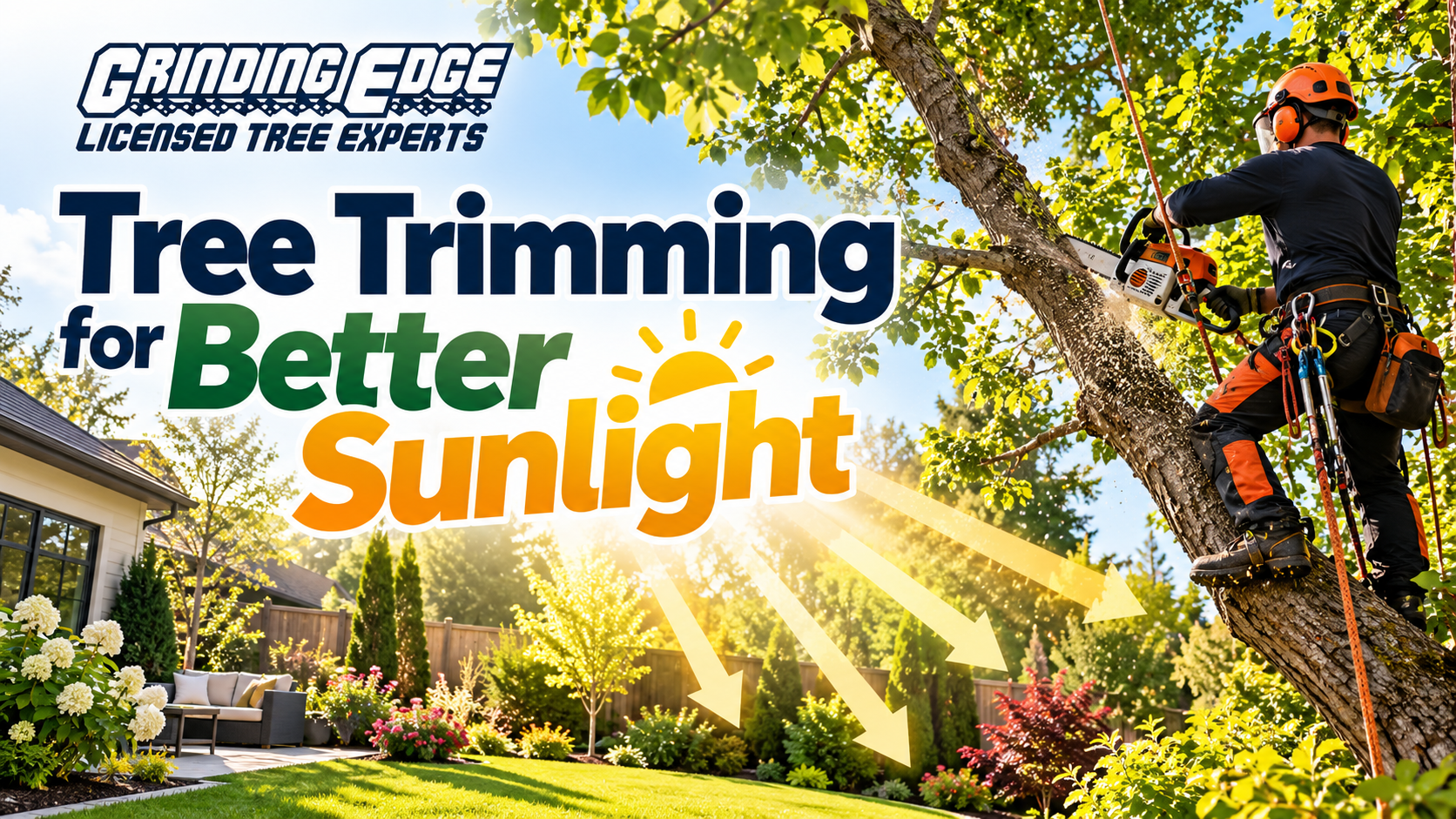
Selective pruning can also improve airflow through the canopy and allow more sunlight to reach parts of the tree. In some cases, it can help manage competing branches and reduce the risk of weak branch attachments.
However, pruning should be performed carefully. Removing too much growth at once can stress a tree and create additional problems.
Why Tree Trimming May Be Necessary
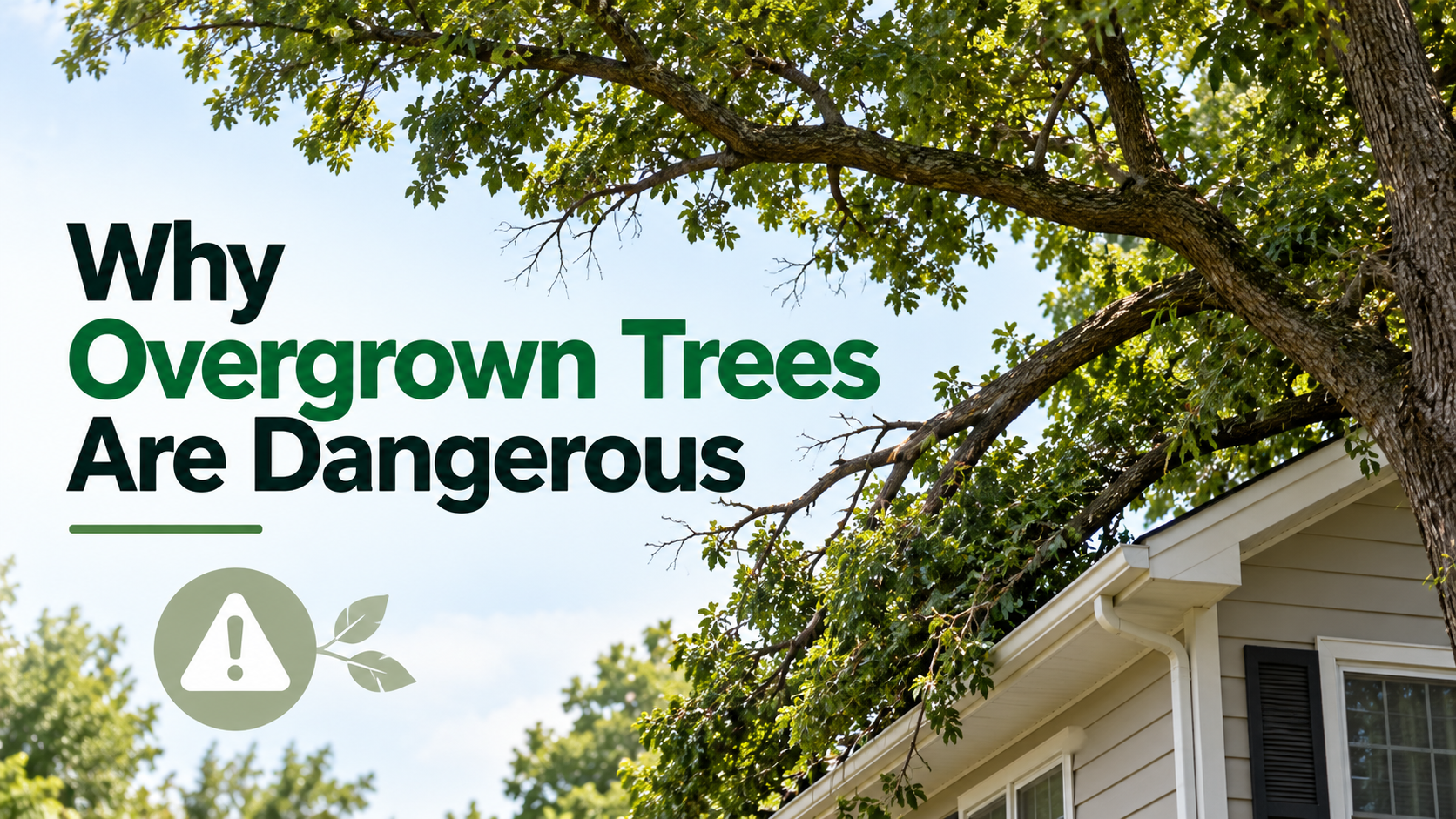
Trees can grow into areas where their branches become a nuisance or a safety concern. Branches may extend toward roofs, windows, sidewalks, driveways, fences, or utility lines.
Regular trimming can help maintain necessary clearance and keep trees from interfering with surrounding structures.
Trimming can also help maintain a neat appearance, particularly in landscaped properties where trees need to remain within specific spaces.
When Should You Prune a Tree?
The ideal pruning time depends on the tree species, climate, health, and reason for pruning.
Dead, damaged, or hazardous branches may need attention whenever they are identified. Other types of pruning may be better performed during specific seasons when the tree is less stressed or when disease risks are lower.
Because tree species respond differently to pruning, homeowners should avoid assuming that every tree should be pruned at the same time of year.
A qualified arborist can recommend an appropriate schedule based on the specific tree.
How Much of a Tree Should Be Removed?
One of the biggest mistakes homeowners can make is removing too much of the canopy at once.
Trees rely on their leaves for photosynthesis, so excessive cutting can reduce the tree’s ability to produce energy. Heavy pruning can also encourage weak, rapid growth or leave large wounds that are more vulnerable to decay.
The goal should generally be selective removal rather than aggressive cutting.
What Is Crown Thinning?
Crown thinning involves selectively removing branches throughout the canopy to improve light penetration and airflow while maintaining the tree’s overall shape.
The goal is not to strip the tree or create a sparse appearance. Instead, properly performed thinning maintains a balanced canopy while reducing excessive branch density.
This type of pruning can be useful for certain trees, but it should be performed with an understanding of the species and its natural growth pattern.
What Is Crown Raising?
Crown raising involves removing lower branches to increase clearance between the ground and the tree canopy.
This may be useful when branches interfere with sidewalks, driveways, roads, buildings, or landscaping.
Crown raising should be performed gradually because removing too many lower branches at once can negatively affect the tree’s structure.
What Is Crown Reduction?
Crown reduction involves selectively reducing the overall size of a tree’s canopy while maintaining its natural shape and structure.
It can sometimes be used when a tree has grown too large for its location or when specific branches need to be shortened.
Crown reduction is different from topping. Proper reduction should preserve appropriate branch structure rather than cutting branches indiscriminately.
Why Tree Topping Is Usually a Bad Idea
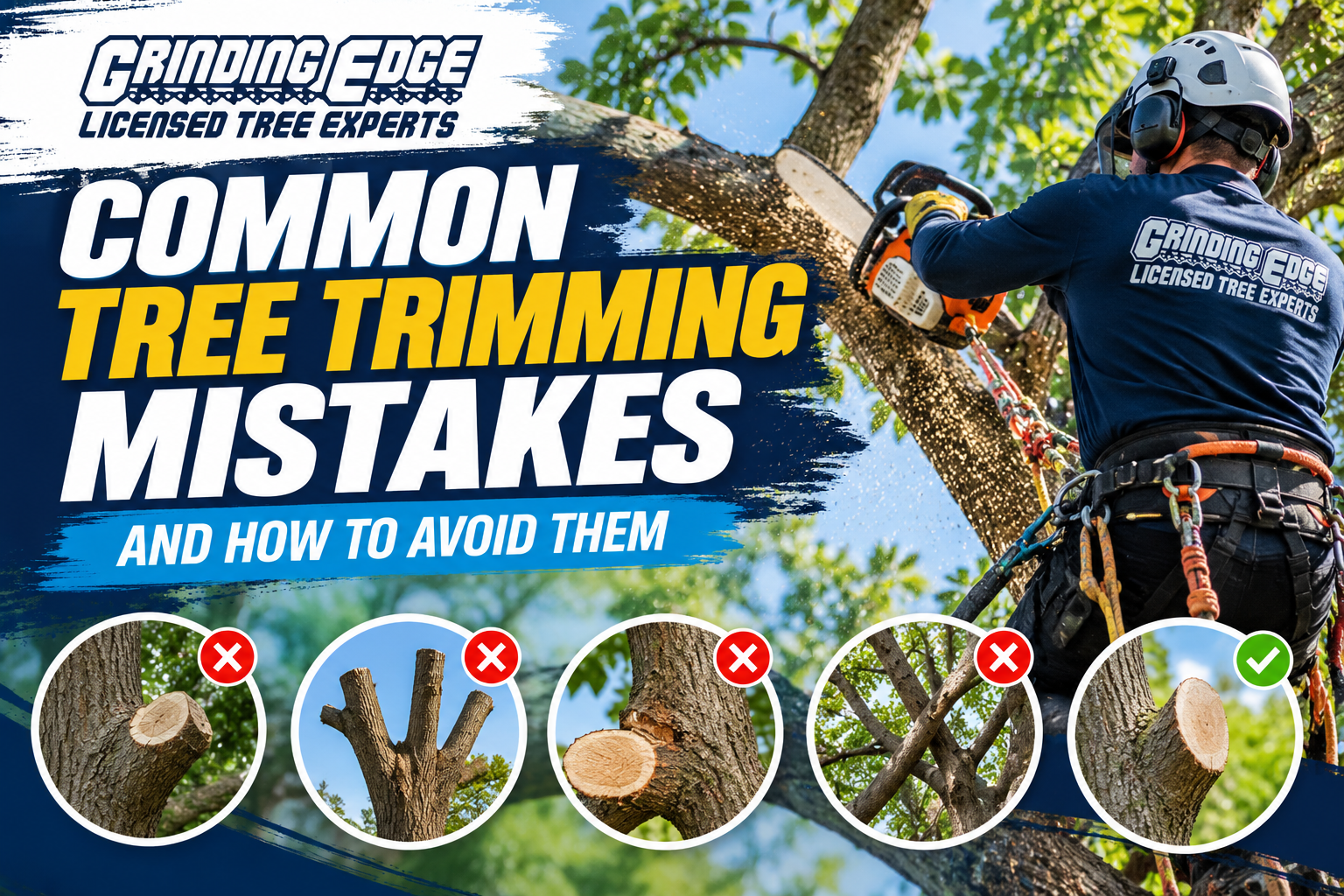
Tree topping involves cutting major branches back to stubs or significantly reducing the height of a tree in a way that disregards its natural structure.
Although homeowners sometimes request topping because they want to make a tree smaller quickly, it can create serious long-term problems. Large cuts can leave trees vulnerable to decay, disease, sun damage, and weakly attached new growth.
If a tree is too large for its location, professional pruning or removal may be safer and more appropriate than topping.
Safety Considerations
Tree work can be dangerous, particularly when branches are large, heavy, unstable, or located near power lines.
Homeowners should be cautious about attempting significant pruning themselves. Cutting from ladders, operating chainsaws, or working near electrical lines can create serious hazards.
For large trees or difficult locations, hiring an experienced tree-care professional can reduce the risk of injury and property damage.
Can Trimming and Pruning Improve Tree Safety?
Yes, properly performed tree care can reduce certain hazards.
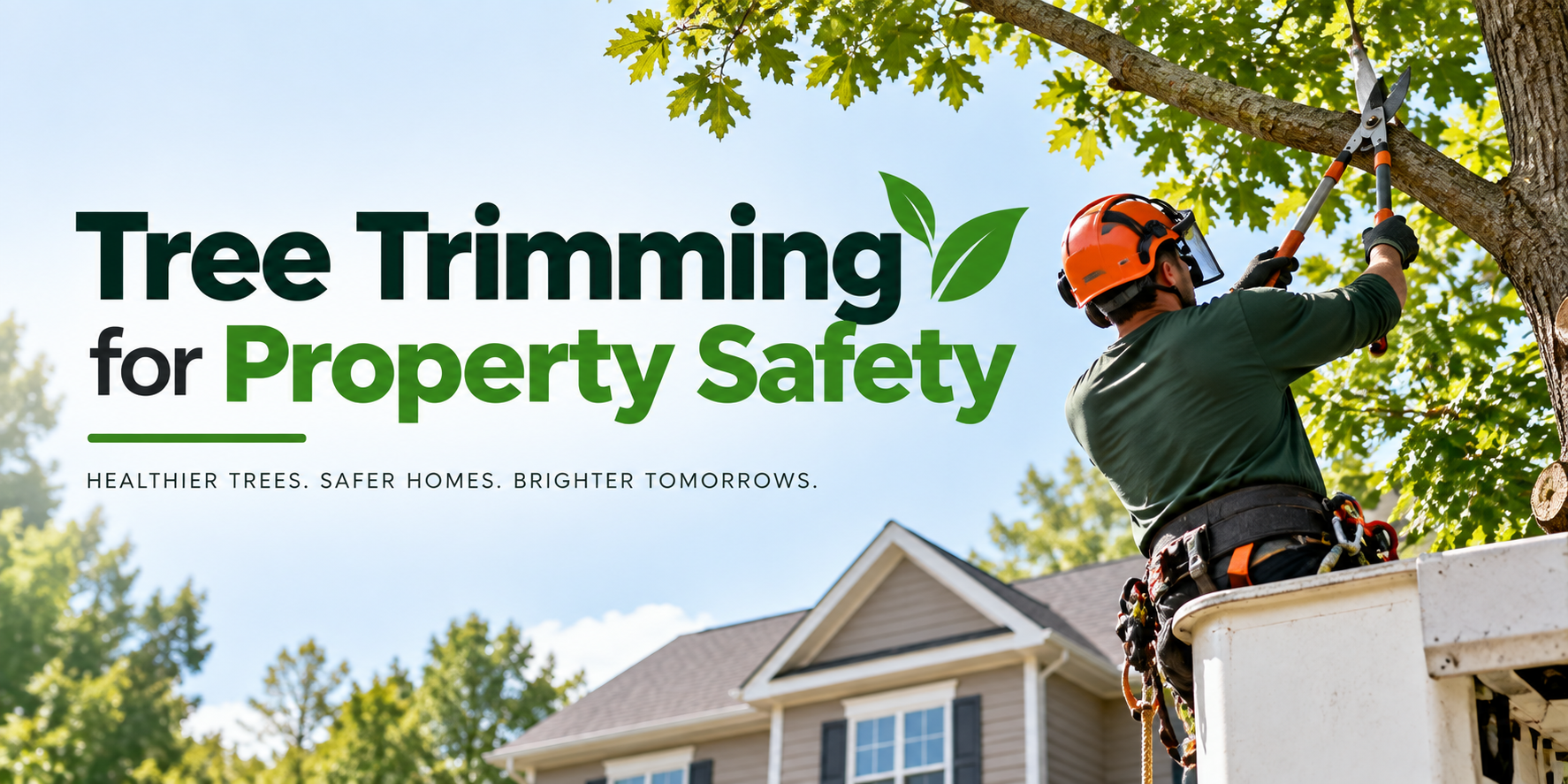
Removing dead, broken, or structurally compromised branches can reduce the likelihood of branch failure. Maintaining clearance from buildings and other structures can also help prevent property damage.
However, tree work should be based on the condition of the tree rather than simply cutting branches whenever they become large.
How Often Should Trees Be Trimmed or Pruned?
There is no universal schedule for every tree.
The appropriate frequency depends on the species, age, growth rate, location, health, and purpose of the tree. Young trees may benefit from structural pruning as they develop, while mature trees may require less frequent maintenance.
Regular inspections can help identify problems before they become major issues.
Choosing a Tree Care Professional
When hiring a tree-care company, ask what type of work they recommend and why.
A reputable professional should be able to explain which branches need to be removed, how the work will affect the tree, and what the long-term objective is.
For complex or valuable trees, consider working with a qualified arborist who understands tree biology and proper pruning techniques.
It is also important to verify insurance and any applicable local requirements before work begins.
Final Thoughts
Tree trimming and tree pruning may sound like the same thing, but their goals can be different.
Trimming generally focuses on managing growth, clearance, and appearance, while pruning focuses more heavily on tree health, structure, and safety.
Both can be valuable when performed correctly. The key is avoiding unnecessary cuts and understanding what the tree actually needs.
Instead of asking only, “How much should I cut?” homeowners should ask, “Why does this branch need to be removed, and how will the cut affect the tree?”
That approach can help preserve healthy trees, reduce potential hazards, and maintain a beautiful landscape for years to come.
Frequently Asked Questions
Is tree trimming the same as tree pruning?
Not exactly. The terms are often used interchangeably, but trimming generally refers to managing growth, appearance, or clearance, while pruning is more focused on tree health, structure, and removing problematic branches.
Which is better for tree health: trimming or pruning?
Proper pruning is generally the more health-focused practice because it involves selectively removing dead, damaged, diseased, or structurally problematic branches. However, both trimming and pruning can be beneficial when performed correctly.
How often should trees be pruned?
The ideal schedule depends on the tree species, age, health, location, and growth rate. Some trees may require periodic structural pruning, while mature trees may need attention less frequently.
Can I trim my trees myself?
Small, accessible branches may be manageable for some homeowners, but larger branches and difficult trees can be dangerous. Professional help is recommended for large trees, branches near structures, or any work involving power lines.
What is tree topping?
Tree topping is the practice of cutting major branches back aggressively, often leaving large stubs. It is generally discouraged because it can damage the tree’s structure and create long-term health and safety problems.
Does pruning make trees grow faster?
Pruning does not necessarily make an entire tree grow faster. Proper pruning can redirect growth and improve the tree’s structure, while excessive pruning can stress the tree and create unwanted rapid regrowth.
Should dead branches be removed from trees?
Dead branches can become hazards and may provide opportunities for pests or decay. Removing them can improve safety, but the appropriate method depends on the branch size, location, and condition.
When is the best time to prune trees?
The best time depends on the tree species and the reason for pruning. Dead or hazardous branches may require attention at any time, while other pruning work may be best scheduled during a particular season.
Can pruning prevent tree damage during storms?
Proper structural pruning may help reduce certain risks by addressing weak, damaged, or poorly positioned branches. However, no pruning method can guarantee that a tree will not be damaged during severe weather.
How do I know whether my tree needs trimming or pruning?
Look at the reason for the work. If the primary concern is clearance, appearance, or controlling overgrowth, trimming may be appropriate. If the concern involves dead branches, disease, structural defects, or long-term tree health, pruning may be the better approach.