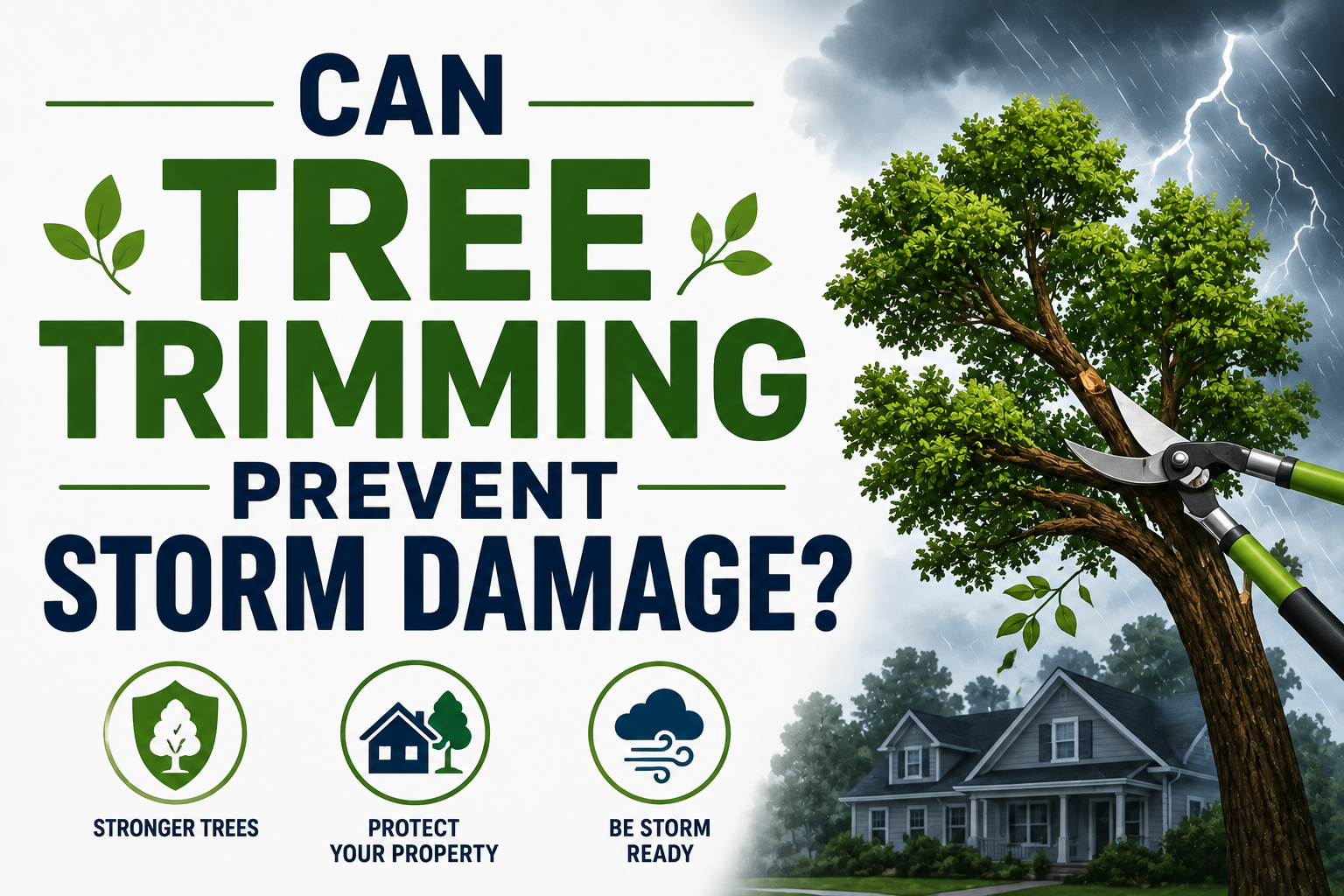
Severe storms can pose a serious threat to trees and the property surrounding them. High winds, heavy rain, lightning, and wet soil can cause branches to break, limbs to fall, or entire trees to become unstable. While tree trimming cannot eliminate every storm-related risk, proper pruning can reduce certain hazards and help trees withstand challenging weather conditions.
For homeowners, understanding how and when to trim trees can be an important part of preparing a property for storm season.
How Storms Damage Trees
Trees can experience several types of damage during severe weather. Strong winds can break dead or weak branches, while heavy rain can make the soil saturated and reduce the stability of a tree’s root system.
Large branches with structural weaknesses may split under stress, particularly when they have included bark, cracks, decay, or excessive weight. In some cases, a damaged tree may lose an entire limb or fall onto nearby structures, vehicles, utility lines, or landscaping.
Tree trimming can address some of these vulnerabilities before severe weather arrives.
How Tree Trimming Can Reduce Storm Risk
Proper pruning can remove dead, damaged, diseased, or structurally weak branches that could otherwise become hazards during a storm. Reducing certain competing or poorly positioned branches can also improve the tree’s overall structure.
The goal isn’t simply to remove as many branches as possible. Excessive pruning can weaken a tree, expose it to sun damage, and encourage unhealthy growth. Effective storm preparation focuses on targeted pruning that addresses identifiable risks while preserving the tree’s natural structure.
Removing Dead and Weak Branches
Dead branches are among the easiest hazards to identify. They no longer receive nutrients and can become brittle over time, making them more likely to break during high winds.
Weak, cracked, or damaged branches can also become dangerous during storms. Removing these branches before severe weather can reduce the number of loose limbs that could fall onto property or people.
However, large or high branches should generally be evaluated and handled by trained professionals, particularly when they are near buildings or utility lines.
Improving Tree Structure
Structural pruning can help young and mature trees develop stronger branch arrangements. Trees with multiple competing leaders, narrow branch attachments, or poorly distributed weight may be more vulnerable to certain types of storm stress.
Selective pruning can sometimes improve the structure by reducing competing branches and encouraging stronger growth patterns.
The appropriate approach depends on the species, age, size, health, and existing structure of the tree.
Managing Overgrown Branches
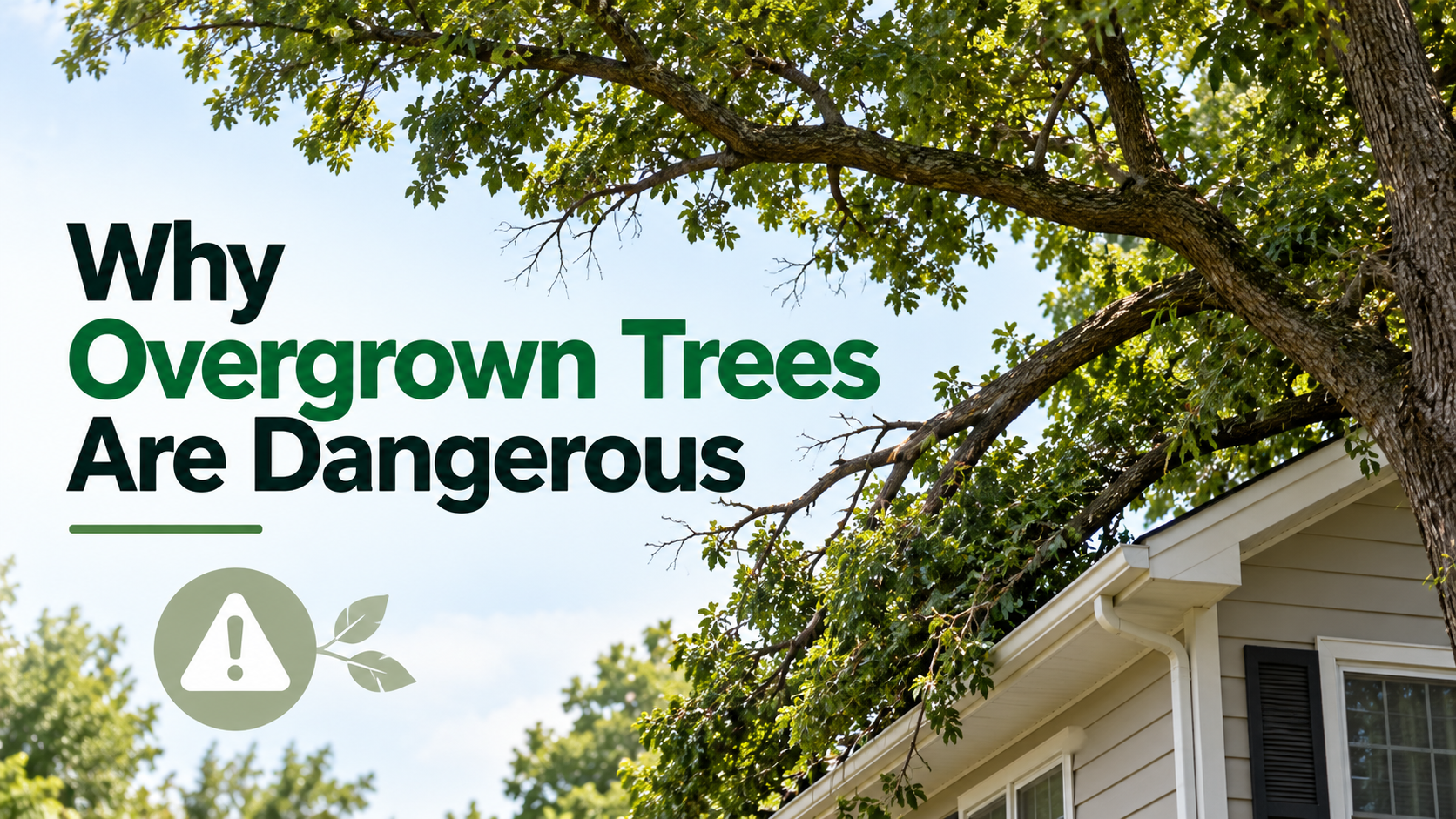
Branches that extend over roofs, driveways, walkways, fences, or other structures can become a concern during severe weather. If a large limb breaks, it may cause significant property damage.
Strategic trimming can create clearance between branches and nearby structures. It can also help reduce the potential impact of falling limbs.
Homeowners should avoid making drastic cuts simply to create maximum clearance. Proper pruning should balance safety with the tree’s long-term health.
Can Trimming Prevent a Tree From Falling?
Tree trimming can reduce certain risks, but it cannot guarantee that a tree will remain standing during a severe storm.
Tree stability depends on many factors, including root condition, soil quality, trunk integrity, species characteristics, previous damage, disease, wind exposure, and overall tree health.
A healthy, well-pruned tree can still fall during extreme weather. Likewise, a tree that looks healthy from the outside may have internal decay or root problems that aren’t visible without professional assessment.
Why Over-Pruning Can Be a Problem
More pruning isn’t necessarily better. Removing too much live canopy can stress a tree and affect its ability to produce food through photosynthesis.
Aggressive pruning can also encourage rapid, weakly attached shoots and leave large wounds that may increase vulnerability to pests or decay.
For this reason, storm preparation should focus on selective pruning rather than excessive cutting. A professional tree-care specialist can determine which branches actually need to be removed.
When Should Trees Be Trimmed?
The best time for tree trimming depends on the species, location, tree condition, and type of pruning required. Some pruning can be performed during dormant periods, while dead or hazardous branches may require attention whenever they are identified.
Homeowners shouldn’t wait until a major storm is forecast to address obvious hazards. Emergency trimming immediately before a storm may be more difficult to schedule, and wet or windy conditions can make tree work more dangerous.
Routine inspections and maintenance are a better approach to long-term storm preparation.
Signs Your Tree May Need Professional Attention
Certain warning signs can indicate that a tree should be evaluated before storm season. These can include dead branches, visible cracks, cavities, decay, leaning, damaged roots, mushrooms near the base, loose bark, or branches rubbing against each other.
Large branches hanging over structures or utility lines also deserve particular attention.
If you’re unsure whether a tree is safe, it’s better to have it assessed by a qualified professional rather than attempting to diagnose a potentially hazardous tree yourself.
What About Trees Near Power Lines?
Trees growing close to utility lines require special care. Branches that contact or approach power lines can create serious safety hazards, especially during storms.
Homeowners should not attempt to trim branches around electrical lines themselves. Utility companies or qualified professionals with the appropriate training should handle work involving power-line clearance.
Other Ways to Prepare Trees for Storms
Tree trimming is only one part of storm preparation. Maintaining overall tree health can also improve resilience. Proper watering during appropriate conditions, protecting the root zone, avoiding damage to the trunk, and monitoring for disease or pests can all contribute to healthier trees.
Regular inspections are particularly useful because problems such as decay, structural weaknesses, or root damage may become more serious over time.
When to Call a Tree-Care Professional
Professional assistance is recommended when trees are large, branches are high, the tree is close to a structure, or there are signs of structural instability.
A qualified arborist or tree-care professional can evaluate the tree’s condition and identify potential hazards. They can also recommend appropriate pruning techniques while considering the tree’s long-term health.
Attempting to remove large branches without the right equipment and experience can create significant risks for both people and property.
Final Thoughts
Tree trimming can help reduce some of the risks associated with storm damage, particularly by removing dead, damaged, or structurally weak branches and improving problematic growth patterns. However, pruning is not a guarantee against storm-related tree failure.
The most effective approach is proactive tree care. Regular inspections, proper pruning, attention to tree health, and professional evaluation of potentially hazardous trees can help homeowners prepare their properties before severe weather arrives.
If a tree has significant defects, is leaning, has damaged roots, or is located near a home or utility line, professional assessment is especially important.
Frequently Asked Questions
Can tree trimming prevent storm damage?
Tree trimming can reduce certain storm-related risks by removing dead, damaged, or weak branches and improving tree structure. However, it cannot completely prevent storm damage or guarantee that a tree will not fall during extreme weather.
What branches should be removed before a storm?
Dead, broken, cracked, diseased, or structurally weak branches may need to be removed. Branches that create a significant hazard near buildings or other structures may also require attention.
Can over-trimming make a tree more vulnerable to storms?
Yes. Excessive pruning can weaken a tree, remove too much of its living canopy, and encourage weak new growth. Proper pruning should be selective and focused on specific structural or safety concerns.
How often should trees be trimmed?
There is no single schedule that applies to every tree. Trimming needs depend on the tree species, age, health, location, growth rate, and previous pruning. Regular inspections can help determine when maintenance is appropriate.
Should I trim my trees before hurricane or storm season?
Proactive tree inspections and necessary pruning can be helpful before periods of severe weather. However, homeowners should avoid waiting until a storm is approaching to address major tree hazards.
Can tree trimming stop a tree from falling?
No. Pruning can reduce some hazards, but it cannot eliminate the risk of tree failure. Root problems, decay, soil conditions, severe winds, and other factors can still cause a tree to fall.
Should I trim branches near power lines myself?
No. Working around power lines can be extremely dangerous. Contact the appropriate utility company or a qualified professional for trees growing near electrical lines.
How can I tell if a tree is dangerous?
Warning signs can include significant leaning, cracks in the trunk or major branches, dead limbs, cavities, decay, damaged roots, loose bark, or mushrooms near the base. A professional assessment is the safest way to evaluate a potentially hazardous tree.